

Quick List of Similes for a Tree
Here are some useful comparisons to get started:
- As tall as a tower
- Like a giant reaching for the sky
- As strong as an oak
- Like a silent guardian
- As steady as a mountain
- Like a giant umbrella
- Like open arms
- As old as a forgotten story
- Like a dancer in the wind
- As green as spring
- Like a cloud of emeralds
- As still as a statue
- Like a living sculpture
- As crooked as a winding road
- Like fingers against the sky
- As graceful as a dancer
- Like a sheltering roof
- As sturdy as a fortress
- Like a tower of leaves
- As quiet as a sleeping child
These are starting points rather than fixed expressions. The strongest choice depends on what you want the reader to notice.
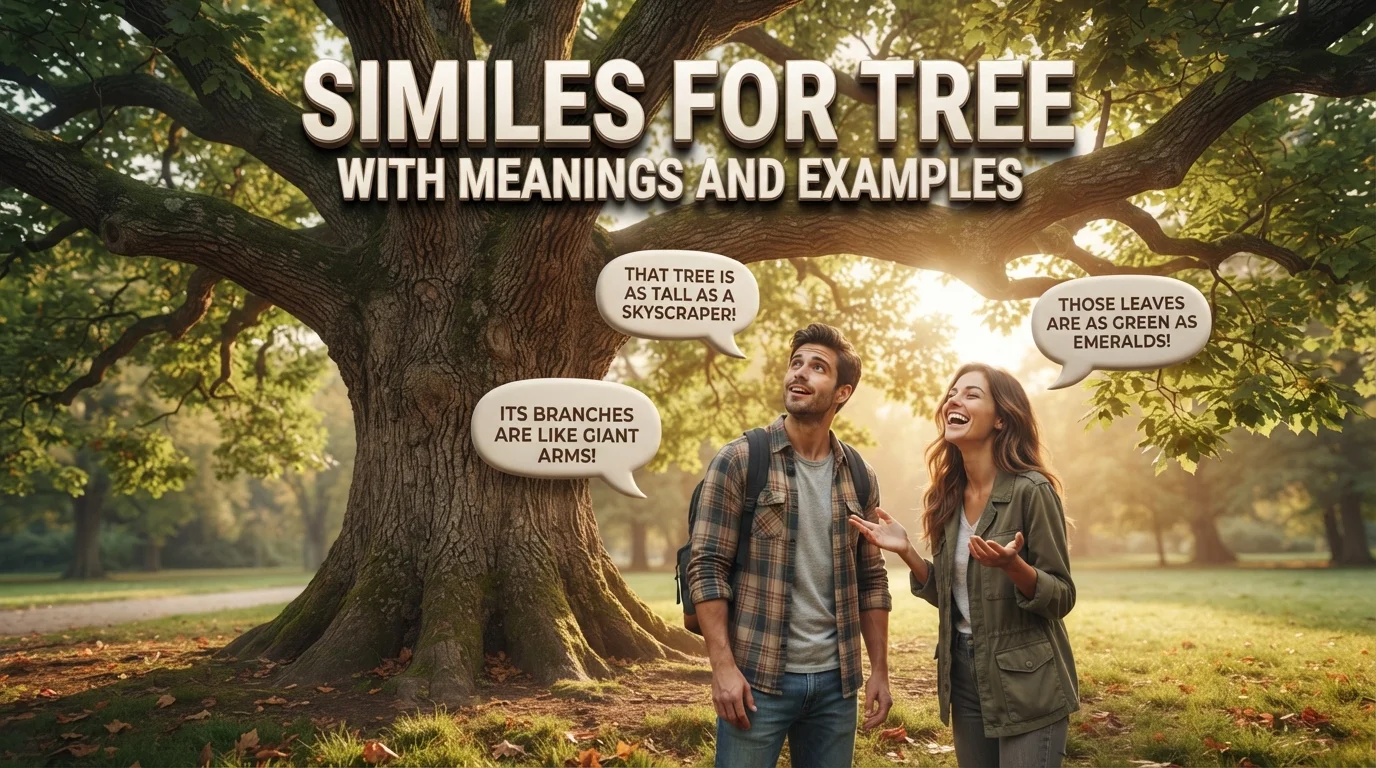
Similes for Tree With Meanings and Examples
1. Like a giant reaching for the sky
Meaning: Emphasizes height, ambition, and an upward-reaching shape.
Example:
The pine stood like a giant reaching for the sky above the mountain trail.
This works especially well for very tall trees.
2. As tall as a tower
Meaning: Describes impressive vertical height.
Example:
The ancient redwood was as tall as a tower, disappearing into the mist.
It creates a quick visual impression without requiring a lengthy explanation.
3. Like a silent guardian
Meaning: Suggests protection, watchfulness, and strength.
Example:
The old oak stood like a silent guardian at the entrance to the farm.
This comparison gives a tree a dignified, almost protective presence.
4. As strong as an oak
Meaning: Suggests physical or emotional strength.
Example:
After years of hardship, she remained as strong as an oak.
This can describe a person as well as a tree.
5. Like a giant umbrella
Meaning: Highlights a tree’s broad canopy and shade.
Example:
The maple spread over the picnic table like a giant umbrella.
This is especially easy for children to understand.
6. Like open arms
Meaning: Describes branches spreading outward in a welcoming shape.
Example:
The tree stretched its branches like open arms toward the children.
The comparison can create a warm, comforting tone.
7. Like fingers against the sky
Meaning: Describes narrow branches reaching upward.
Example:
The bare branches looked like fingers against the gray winter sky.
This works particularly well in atmospheric or slightly eerie writing.
8. Like a dancer in the wind
Meaning: Shows graceful movement as branches and leaves sway.
Example:
The willow moved like a dancer in the evening wind.
The image is gentle and fluid rather than forceful.
9. As steady as a mountain
Meaning: Suggests stability and resistance to movement.
Example:
The massive tree remained as steady as a mountain during the storm.
This is useful when the tree’s resilience matters more than its appearance.
10. Like a living sculpture
Meaning: Highlights an unusual, beautiful, or carefully shaped tree.
Example:
The twisted olive tree looked like a living sculpture in the garden.
This comparison works particularly well for unusual shapes.
Similes for a Tree’s Beauty
Trees can be described through color, shape, light, blossoms, texture, and atmosphere. Instead of simply calling a tree “beautiful,” choose an image that explains what kind of beauty you mean.
11. Like a crown of emeralds
Meaning: Suggests rich green foliage.
Example:
The summer canopy looked like a crown of emeralds beneath the afternoon sun.
12. Like a cloud of green silk
Meaning: Creates a soft, lush image of dense leaves.
Example:
The young tree looked like a cloud of green silk against the blue sky.
13. As bright as a summer morning
Meaning: Gives the tree a cheerful, luminous quality.
Example:
The flowering tree was as bright as a summer morning.
14. Like stars scattered across the branches
Meaning: Works well for blossoms, fruit, or small points of light.
Example:
The white blossoms looked like stars scattered across the branches.
15. Like a painting brought to life
Meaning: Suggests a scene that looks unusually picturesque.
Example:
The autumn tree stood like a painting brought to life.
This is useful for descriptive essays and poetic scenes.
16. As colorful as a sunset
Meaning: Emphasizes vivid autumn foliage.
Example:
The maple was as colorful as a sunset after the first cold nights of October.
17. Like a blanket of gold
Meaning: Describes golden leaves covering branches or the ground.
Example:
The tree looked like a blanket of gold beneath the afternoon light.
18. Like a lantern in the darkness
Meaning: Suggests that a tree stands out brightly against a dark background.
Example:
The autumn tree glowed like a lantern in the darkness.
Similes for a Tree’s Strength and Stability
When describing an old or sturdy tree, comparisons based on buildings, mountains, guardians, and strong materials can communicate resilience.
19. As sturdy as a fortress
Meaning: Suggests exceptional strength and protection.
Example:
The old oak was as sturdy as a fortress against the winter winds.
20. Like a soldier standing guard
Meaning: Gives the tree a disciplined, protective quality.
Example:
The row of trees stood like soldiers standing guard along the road.
21. As firm as stone
Meaning: Emphasizes solidity and resistance to movement.
Example:
The ancient trunk was as firm as stone beneath my hand.
22. Like an anchor in the earth
Meaning: Highlights deep roots and stability.
Example:
The old tree stood like an anchor in the earth while the storm raged around it.
23. As enduring as an old fortress
Meaning: Suggests that the tree has survived for a long time.
Example:
The giant oak seemed as enduring as an old fortress overlooking the valley.
Similes for Branches
Branches offer opportunities to describe shape, movement, reach, texture, and mood.
24. Like outstretched arms
Meaning: Shows branches spreading widely.
Example:
The branches reached over the sidewalk like outstretched arms.
25. Like a spider’s web
Meaning: Highlights a complex network of thin branches.
Example:
The bare branches stretched across the moon like a spider’s web.
26. Like crooked fingers
Meaning: Suggests thin, twisted, irregular branches.
Example:
The winter branches curled like crooked fingers against the window.
27. Like veins across the sky
Meaning: Creates an intricate visual image.
Example:
The branches spread like veins across the pale evening sky.
28. Like ribbons in the breeze
Meaning: Suggests flexible, flowing movement.
Example:
The slender branches moved like ribbons in the breeze.
Similes for Leaves
Leaves can be compared through color, movement, sound, texture, and light.
29. Like butterflies fluttering in the breeze
Meaning: Suggests light, delicate movement.
Example:
The leaves trembled like butterflies fluttering in the breeze.
30. Like coins in the sunlight
Meaning: Suggests leaves that shimmer or flash brightly.
Example:
The leaves flickered like coins in the sunlight.
31. Like tiny green sails
Meaning: Emphasizes leaves moving in the wind.
Example:
The fresh leaves fluttered like tiny green sails.
32. As soft as velvet
Meaning: Highlights the perceived softness or smoothness of certain leaves.
Example:
The new leaves looked as soft as velvet in the morning light.
33. Like confetti falling from the sky
Meaning: Works well for leaves drifting down in autumn.
Example:
The yellow leaves fell like confetti from the branches.
Similes for a Tree in the Wind
Wind changes a tree from something stationary into something full of movement. The best comparisons here usually focus on dancing, bending, waving, or trembling.
34. Like a dancer performing onstage
Meaning: Shows rhythmic, graceful movement.
Example:
The willow swayed like a dancer performing onstage.
35. Like waves on the ocean
Meaning: Describes branches or foliage moving together in a strong breeze.
Example:
The treetops rolled like waves on the ocean.
36. Like a flag in a storm
Meaning: Suggests dramatic, forceful movement.
Example:
The branches whipped like a flag in a storm.
37. As restless as a child
Meaning: Gives the moving tree a playful or energetic quality.
Example:
The young branches were as restless as a child on a long car ride.
Similes for an Old Tree
Age changes the visual character of a tree. A comparison can communicate not only its years but also the sense of history surrounding it.
38. Like an old storyteller
Meaning: Suggests wisdom, memory, and a long history.
Example:
The ancient oak stood like an old storyteller who had watched generations pass.
39. As weathered as an old cabin
Meaning: Highlights rough bark and years of exposure.
Example:
Its trunk was as weathered as an old cabin beside the mountain road.
40. Like a forgotten monument
Meaning: Suggests age, permanence, and solitude.
Example:
The lonely tree stood like a forgotten monument in the middle of the field.
41. As patient as time
Meaning: Gives the tree an enduring, unhurried quality.
Example:
The old tree remained as patient as time while the seasons changed around it.
Similes for a Tree in Different Seasons
A tree can look completely different from one season to another, making seasonal comparisons especially useful in descriptive writing.
Spring
42. Like a child waking from sleep
The comparison suggests fresh growth and renewed life.
The tree opened its first green leaves like a child waking from sleep.
Summer
43. Like a green cathedral
The comparison emphasizes a large canopy and the cool, sheltered feeling underneath it.
The old tree spread overhead like a green cathedral.
Autumn
44. Like a torch of fire
The comparison emphasizes vivid orange, red, or golden foliage.
The maple burned like a torch of fire against the gray sky.
Winter
45. Like black lace against the sky
The comparison suits bare branches silhouetted against a pale or dark background.
The branches looked like black lace against the winter sky.
More Creative Tree Similes
These comparisons move beyond basic descriptions and can work particularly well in stories, poetry, and imaginative writing.
46. Like a book with a thousand stories
Meaning: Suggests that an old tree has witnessed many events.
The ancient tree stood like a book with a thousand stories hidden in its rings.
47. Like a roof over the earth
Meaning: Highlights the protective canopy.
The enormous branches spread like a roof over the earth.
48. Like a lighthouse without a light
Meaning: Can suggest a solitary tree standing prominently in an open landscape.
The lone tree stood on the hill like a lighthouse without a light.
49. Like a quiet friend
Meaning: Creates a gentle, comforting emotional association.
The tree beside the porch stood like a quiet friend through every season.
50. Like a memory that refused to fade
Meaning: Gives an old or familiar tree an emotional connection to the past.
The tree in the abandoned yard remained like a memory that refused to fade.
This kind of comparison is especially useful when the tree has symbolic importance to a character.
How to Choose the Right Simile for a Tree
The best tree simile depends on what you want the reader to notice.
If the tree is exceptionally tall, use an image associated with height:
The tree stood like a tower above the houses.
If its branches provide shade, choose something broad:
The tree spread like a giant umbrella.
If the tree has survived decades of storms, choose a comparison that suggests endurance:
The oak stood like a fortress against the wind.
If the scene is peaceful, avoid an aggressive comparison such as “like a soldier.” A gentler image may work better:
The willow moved like a dancer in a quiet breeze.
This is an important part of effective figurative language: the same tree can inspire completely different similes depending on the scene and intended tone.
How Tree Similes Change the Mood of Writing
A comparison doesn’t merely describe appearance. It can influence how readers feel about the scene.
| Simile style | Possible effect | Example |
|---|---|---|
| Gentle | Peaceful, comforting | Like a quiet friend |
| Powerful | Strong, dramatic | Like a fortress |
| Playful | Lighthearted | Like a dancer |
| Mysterious | Strange, uncertain | Like crooked fingers |
| Beautiful | Elegant, vivid | Like a crown of emeralds |
| Eerie | Unsettling | Like black lace against the sky |
| Nostalgic | Reflective, emotional | Like a memory that refused to fade |
| Protective | Safe, welcoming | Like a giant umbrella |
These effects are not fixed rules. Context, surrounding words, and the reader’s interpretation all influence the final tone.
Using Tree Similes in Creative Writing
Tree similes can work in several kinds of writing.
Descriptive writing
Use a comparison to make a landscape easier to visualize.
The maple stood like a tower at the edge of the field, its red leaves glowing in the afternoon sun.
Storytelling
A tree can help establish the atmosphere of a scene.
The bare branches stretched like crooked fingers over the abandoned house.
Poetry
Shorter comparisons can create rhythm and imagery.
The willow swayed
like a dancer
beneath the moon.
Character description
A tree comparison doesn’t have to describe the tree itself. It can describe a person.
He stood as steady as an old oak while everyone else panicked.
School writing
Simple, clear comparisons are often more effective than complicated ones.
The tree was as tall as a tower, and its branches spread like open arms.
The comparison should support the main idea rather than appear simply because the assignment asks for figurative language.
How to Create Your Own Simile for a Tree
You don’t need to memorize dozens of comparisons to write an effective simile. Start by deciding what quality of the tree you want to show.
1. Identify the quality
Ask yourself:
- Is the tree tall?
- Strong?
- Old?
- Beautiful?
- Lonely?
- Moving?
- Twisted?
- Peaceful?
- Frightening?
- Colorful?
2. Find a familiar image
Think of something that naturally shares that quality.
For example:
Tall → tower
Strong → fortress
Graceful movement → dancer
Wide canopy → umbrella
Twisted branches → fingers
3. Connect the images
Use like or as.
The tree stood like a tower.
Or:
The tree was as tall as a tower.
4. Add the setting when useful
A little context can make the comparison more vivid.
The lone pine stood like a tower above the snow-covered field.
5. Check the tone
Ask whether the comparison matches the scene.
A “fortress” may work for a dramatic storm scene but feel too harsh for a peaceful garden.
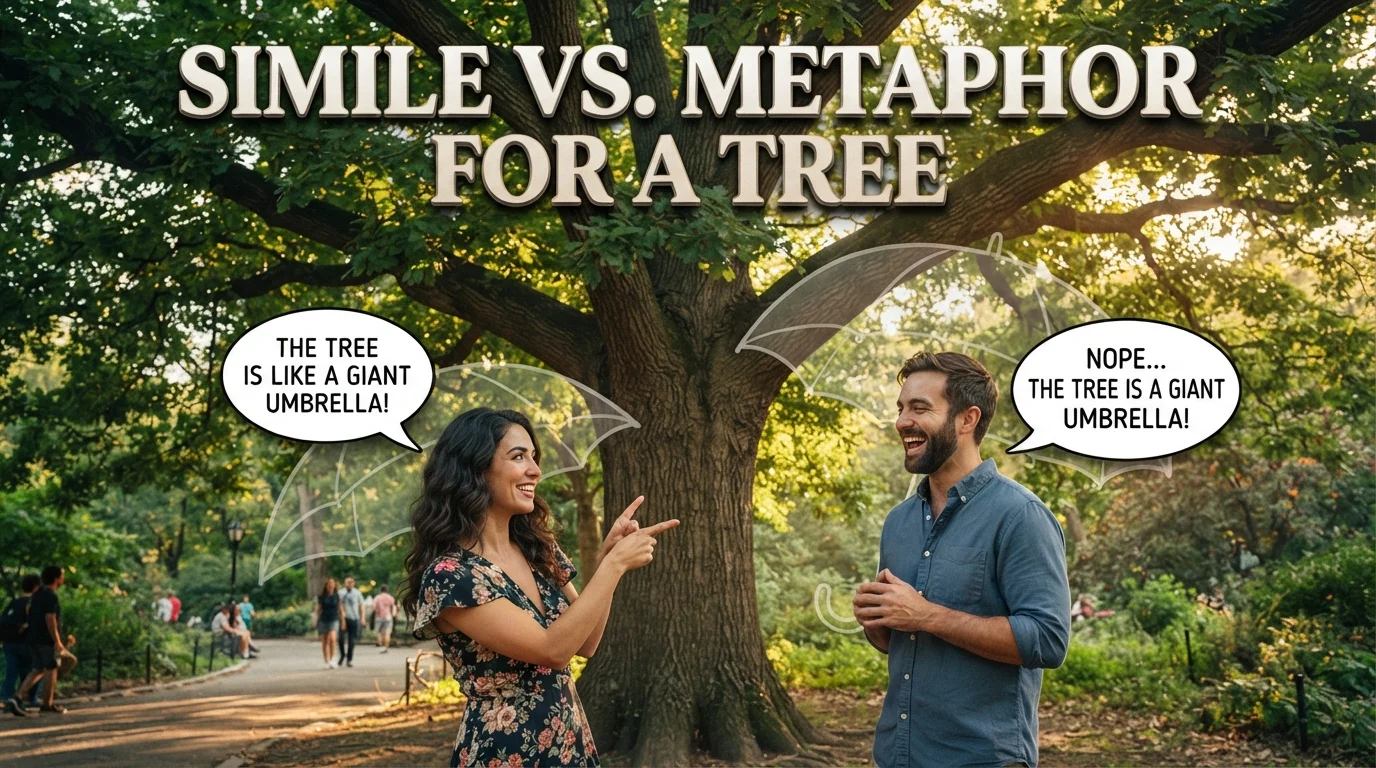
Simile vs. Metaphor for a Tree
The difference is simple.
A simile makes a comparison using words such as like or as.
The tree stood like a giant.
A metaphor makes the comparison directly.
The tree was a giant.
Both can create imagery, but the structure is different.
If the goal is specifically to write a simile, make the comparison explicit with like or as.
Common Mistakes When Writing Tree Similes
Using a comparison that says nothing specific
The tree was like something big.
This doesn’t give the reader a useful image.
A stronger version would identify the relevant quality:
The tree stood like a tower above the tiny houses.
Mixing incompatible images
A comparison should make sense within the context.
If you’re describing gentle movement, an image associated with violent motion may create the wrong impression.
Making every sentence figurative
A paragraph packed with similes can become difficult to read.
One strong comparison can be more effective than five weak ones.
Choosing an image only because it sounds fancy
A complicated comparison isn’t automatically a good comparison.
Clarity matters. Readers should understand the connection without having to solve a puzzle.
Forgetting the scene
The same tree can look peaceful in spring, threatening during a storm, lonely in winter, or magical beneath moonlight.
Let the setting guide the comparison.
Are These Tree Similes Only for Describing Trees?
No. A useful tree comparison can describe people, emotions, places, actions, or objects.
For example:
She stood as steady as an old oak.
Here, the tree helps communicate the person’s stability.
Or:
His arms stretched like branches toward the ceiling.
The tree image describes a person’s physical movement.
This is one reason tree imagery works so well in creative writing: trees have recognizable qualities—height, strength, roots, branches, leaves, movement, growth, and age—that can be transferred to other subjects.
Final Tips for Using Similes for Tree
A strong tree simile should do more than replace an adjective.
Instead of:
The tree was beautiful.
Try:
The tree glowed like a lantern against the evening sky.
Instead of:
The tree was old.
Try:
The ancient tree stood like a forgotten monument at the edge of the field.
Instead of:
The branches moved in the wind.
Try:
The branches swayed like dancers beneath the rising wind.
The goal is not to make every sentence sound poetic. The goal is to give the reader a precise image, feeling, or impression that an ordinary description might not communicate as effectively.