
What Is a Simile for a Blizzard?
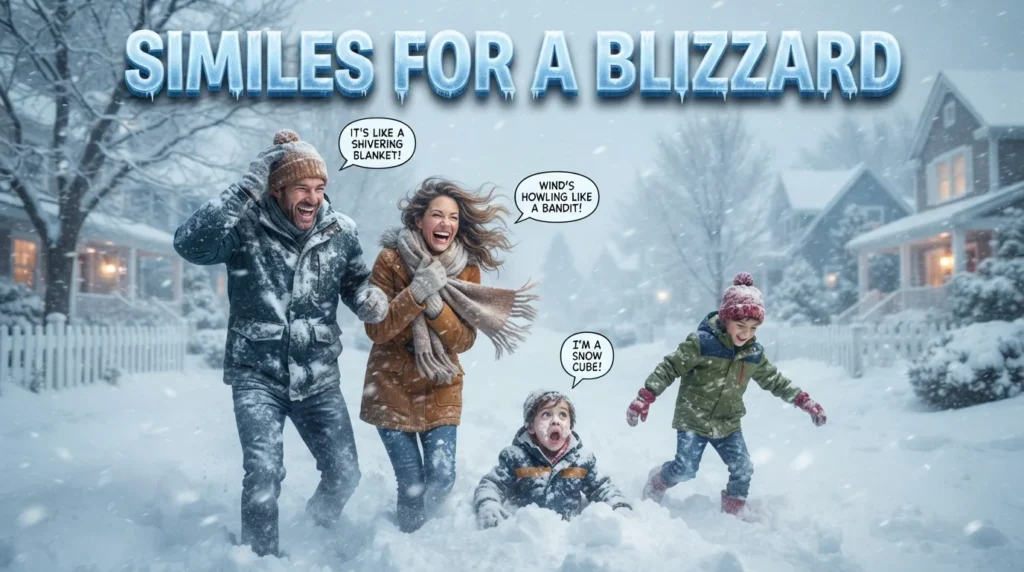
A simile for a blizzard compares the storm or one of its characteristics with something else using like or as.
For example:
The blizzard roared like an angry ocean.
The comparison gives the storm a powerful, noisy quality.
Another example:
Snow swept across the road like a white curtain.
This helps the reader visualize how falling and blowing snow can obscure the landscape.
90+ Similes for a Blizzard
Similes for a Blizzard’s Snow
- The snow fell like a curtain of white silk.
- Snow poured from the sky like flour from a shaken bag.
- The flakes swirled like tiny dancers in the wind.
- Snow covered the ground like a thick white blanket.
- The snowfall came down like a waterfall of feathers.
- Snow rushed through the air like clouds breaking apart.
- The flakes flew like white sparks through the darkness.
- Snow drifted across the fields like waves across an ocean.
- The falling snow looked like a million white moths.
- Snow blanketed the landscape like frosting spread over a cake.
- The flakes tumbled from the sky like handfuls of confetti.
- Snow swept across the road like smoke.
- The snow fell as thick as a wall.
- White flakes raced through the air like birds fleeing a storm.
- The snow covered everything like a freshly pulled sheet.
Similes for Blizzard Wind
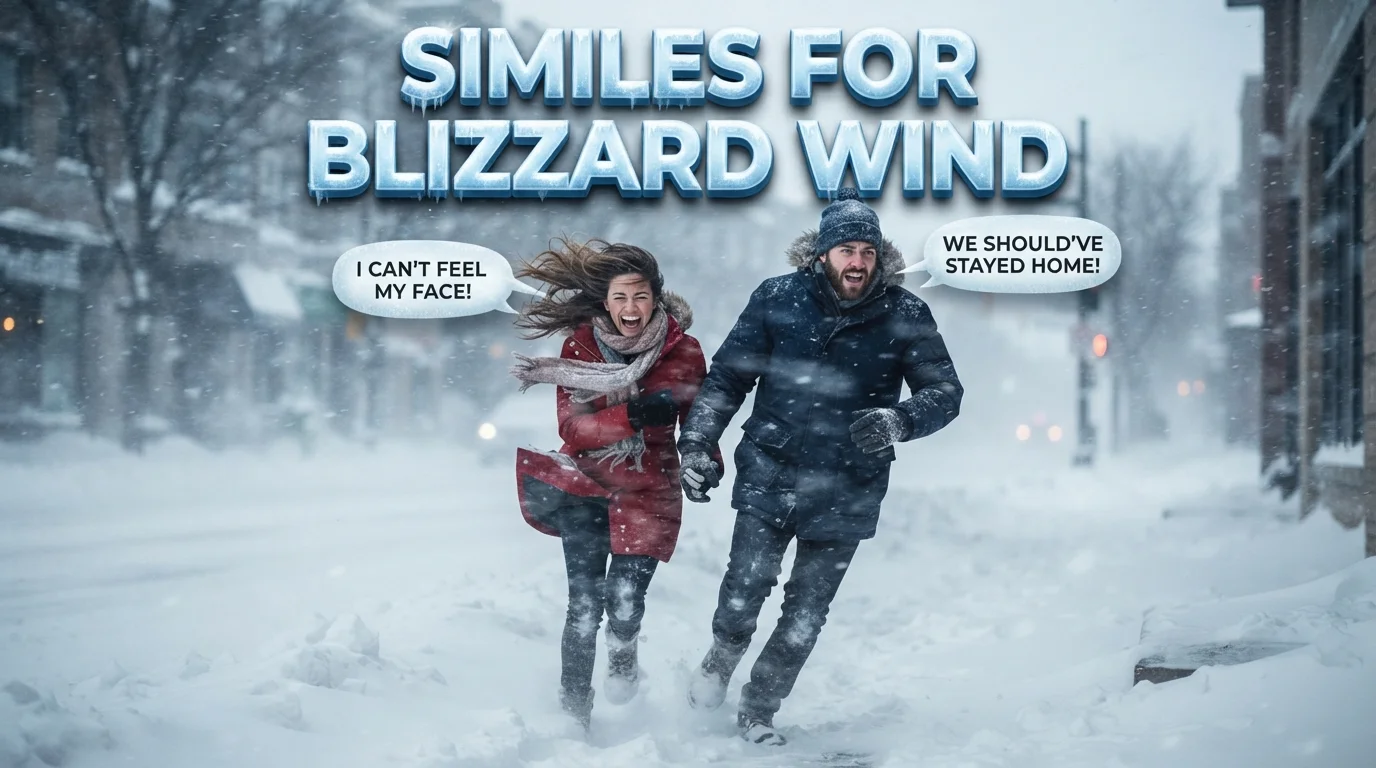
The wind is often what makes a blizzard feel powerful and threatening.
- The wind howled like a pack of wolves.
- The blizzard roared like an angry ocean.
- The wind screamed like a siren in the darkness.
- The icy wind whipped like a thousand tiny lashes.
- The wind rushed through the trees like a stampede.
- The storm howled like a giant beast.
- The wind shrieked like a whistle through the night.
- The gusts crashed against the windows like waves against a ship.
- The wind tore across the fields like a runaway train.
- The blizzard’s wind roared like an engine pushed to its limit.
- The wind circled the house like a restless animal.
- The gusts struck the walls like pounding fists.
- The wind raced across the snow like a wild horse.
- The storm screamed like thousands of voices outside the door.
- The wind rattled the windows like an impatient drummer.
Similes for the Intensity of a Blizzard
- The blizzard hit like a freight train.
- The storm arrived like a wall crashing across the horizon.
- The snowstorm grew like a wave gathering strength.
- The blizzard swept over the town like a giant white wave.
- The storm struck as suddenly as a slammed door.
- The snowfall became as thick as a curtain.
- The blizzard raged like a fire out of control.
- The storm moved across the land like an army on the march.
- The snowstorm swallowed the landscape like a rising tide.
- The blizzard rolled in like a dark cloud with no end.
- The storm grew like a drumbeat becoming louder with every moment.
- The snowstorm struck like a hammer against the quiet landscape.
- The blizzard swept forward like a rushing river.
- The storm pressed against the town like a giant hand.
- The snowfall built up like layers of icing on a cake.
Similes for Blizzard Visibility and Whiteout Conditions
A blizzard can dramatically change what a person can see.
- The snow blurred the landscape like a fogged window.
- The whiteout swallowed the road like a blank page.
- The blowing snow was as thick as a curtain.
- The horizon disappeared like a picture erased from a page.
- The world looked as white as a sheet of paper.
- The snow hid the trees like a curtain drawn across a stage.
- The road vanished like a trail erased by an invisible hand.
- The landscape became as featureless as a blank canvas.
- Snow filled the air like smoke.
- The houses disappeared like shadows behind frosted glass.
- The trees faded into the storm like figures disappearing into fog.
- The familiar road looked like a path through an endless cloud.
- The storm wrapped the town like a thick white veil.
- Everything beyond the porch disappeared like ink washed from paper.
- The whiteout spread like a curtain closing over the world.
Similes for the Cold of a Blizzard
- The cold bit like sharp teeth.
- The air was as cold as ice straight from a freezer.
- The wind felt like needles against exposed skin.
- The freezing air wrapped around him like an icy blanket.
- The cold stung like hundreds of tiny pins.
- The air was as sharp as a blade.
- The wind cut through the coat like a knife through paper.
- The freezing air clung like wet cloth.
- The cold settled over the town like a heavy blanket.
- The icy wind burned like frost against bare skin.
Similes for the Sound of a Blizzard
- The wind howled like wolves beyond the trees.
- The storm roared like a waterfall.
- Snow struck the windows like handfuls of sand.
- The wind rattled the roof like drums in a marching band.
- The blizzard screamed like a train rushing through a tunnel.
- The gusts groaned like an old wooden ship.
- The wind whistled like a kettle left boiling.
- The snow tapped against the glass like impatient fingers.
- The storm thundered like an approaching army.
- The wind shook the trees like an enormous hand.
Similes for a Blizzard at Night
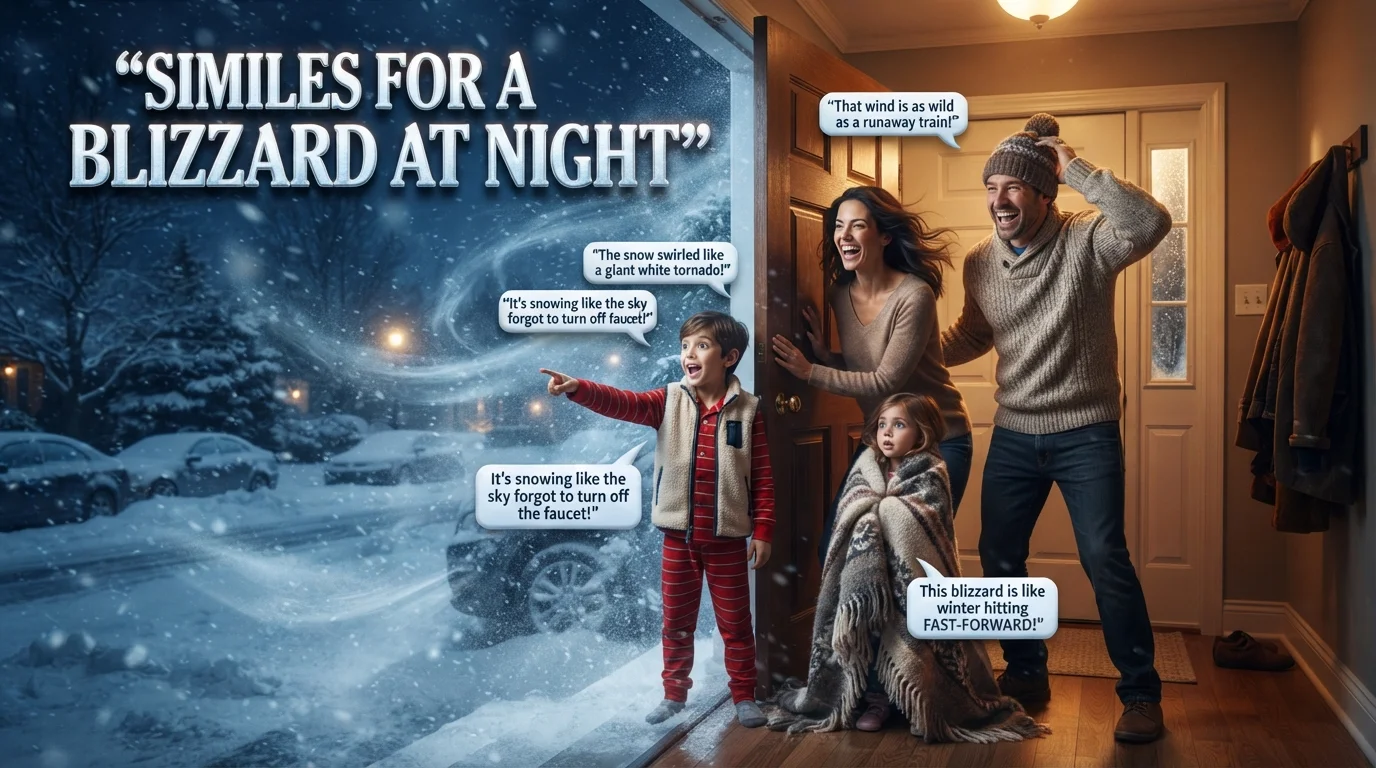
- The blizzard moved through the darkness like a ghost.
- Snowflakes flashed through the night like white sparks.
- The storm covered the moon like a dark curtain.
- The snow glowed like silver beneath the porch light.
- The wind moved through the darkness like a restless spirit.
- The storm surrounded the house like a giant shadow.
- The night became as white as moonlit clouds.
- Snow swirled around the streetlights like tiny stars caught in a whirlpool.
- The houses looked like faint shadows behind a white veil.
- The storm stretched across the night like an endless sea.
Similes for a Blizzard’s Aftermath
- The town looked like a world covered in powdered sugar.
- Snow covered the cars like thick white blankets.
- The streets looked like frozen rivers.
- The trees stood like white sculptures.
- The rooftops looked like mountains of snow.
- The landscape was as quiet as an empty church.
- The snowdrifts rose like small white hills.
- The buried cars looked like toys beneath a blanket.
- The neighborhood looked like a winter kingdom.
- The world after the storm was as still as a photograph.
Similes for a Blizzard by Mood
The same storm can create different impressions depending on the writer’s purpose.
| Mood | Simile | What It Can Convey |
|---|---|---|
| Frightening | Like a giant beast | Threat and uncertainty |
| Powerful | Like a freight train | Force |
| Mysterious | Like a ghost | Mystery |
| Chaotic | Like a stampede | Confusion and movement |
| Peaceful | Like a white blanket | Calmness |
| Lonely | Like an endless sea | Isolation |
| Violent | Like pounding fists | Aggression |
| Beautiful | Like silver feathers | Delicate winter imagery |
| Overwhelming | Like a giant wave | Immensity |
| Quiet | Like a photograph | Stillness after the storm |
A comparison does not have one fixed emotional meaning. The surrounding sentence and story determine how readers interpret it.
Similes for a Blizzard for Kids
Young writers often need simple comparisons that are easy to understand.
- The snow fell like feathers.
- The wind howled like wolves.
- The snow covered the ground like a blanket.
- The storm roared like a giant beast.
- The flakes flew like tiny birds.
- The wind blew like a speeding train.
- The snow was as white as paper.
- The cold felt like tiny needles.
- The storm moved like a giant wave.
- The snow swirled like dancing butterflies.
- The wind shook the trees like a giant hand.
- The snow covered the cars like blankets.
Similes for a Blizzard in School Writing
A strong descriptive paragraph can combine different kinds of imagery rather than repeatedly describing the snow.
For example:
The blizzard swept across the town like a giant white wave. Snow flew through the air like feathers caught in a whirlwind, while the wind howled like a pack of wolves. The road disappeared like a trail erased from a map, and the freezing air stung like tiny needles.
Notice that each comparison has a different purpose:
- giant white wave → overall storm
- feathers → snow movement
- pack of wolves → sound
- erased trail → visibility
- tiny needles → cold
This creates a fuller sensory description.
Similes for a Blizzard in Stories
A blizzard can help establish the mood of a scene.
For suspense
The blizzard swallowed the road like a curtain closing over a stage.
For danger
The wind struck the cabin like a battering ram.
For mystery
Snow drifted through the darkness like ghosts searching for a place to disappear.
For isolation
The farmhouse stood alone like a tiny island in an endless white sea.
For beauty
Snowflakes spun beneath the moonlight like silver feathers.
For chaos
The storm swept across the valley like a herd of wild horses.
Similes for a Blizzard in Poetry
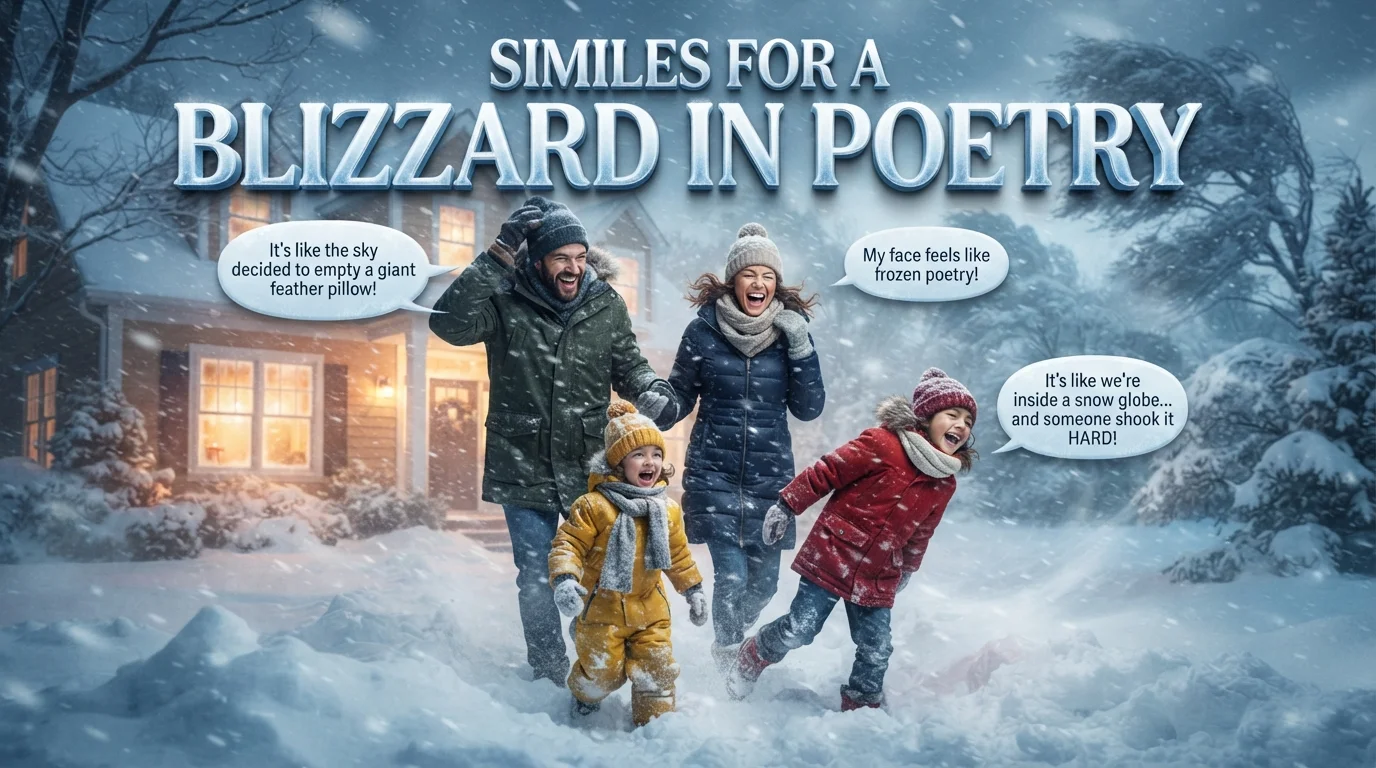
Blizzards offer strong imagery for poems because they combine movement, sound, color, cold, and silence.
For example:
The blizzard crossed the valley
like an ocean made of snow,
while the winter wind
howled like wolves
beyond the frozen trees.
Or:
Snow spun through the darkness
like silver feathers,
while the road disappeared
like a forgotten line
erased from a page.
The comparisons can describe the storm while also establishing its emotional atmosphere.
How to Create Your Own Blizzard Similes
You don’t need to start with a clever phrase. Start with the specific quality you want to describe.
1. Choose one feature
For example:
The wind
2. Decide what it feels or sounds like
Perhaps it is:
- loud
- fast
- cold
- aggressive
- unpredictable
3. Brainstorm related images
For a loud wind, think about:
- wolves
- trains
- sirens
- thunder
- waves
4. Choose the strongest image
The wind howled like a pack of wolves.
5. Put it into the scene
The wind howled like a pack of wolves as snow battered the windows.
Now the simile supports the setting rather than appearing as an isolated phrase.
How to Make Blizzard Similes More Original
Some comparisons are familiar:
The wind howled like wolves.
That can still be effective when clarity matters.
For a more distinctive creative description, focus on a particular action or sensory detail:
The wind prowled around the cabin like something searching for a way inside.
Or instead of:
The snow fell heavily.
Try:
Snow poured from the sky like a white curtain being pulled across the world.
Fresh imagery works best when it remains understandable.
You do not need to make every comparison unusual. A familiar simile can sometimes communicate an idea faster and more naturally than an elaborate one.
Blizzard Similes by Sensory Detail
| Sense | Example | Focus |
|---|---|---|
| Sight | Snow moved like a white curtain | Visibility |
| Sound | Wind howled like wolves | Noise |
| Touch | Cold stung like needles | Physical sensation |
| Movement | Snow raced like waves | Speed |
| Atmosphere | Storm surrounded the house like a shadow | Isolation |
Using several senses can make a blizzard scene feel much more immersive.
Common Mistakes When Writing Blizzard Similes
1. Describing only the snow
A blizzard is more than snowfall.
Consider:
- wind
- temperature
- visibility
- sound
- movement
- darkness
- landscape
- atmosphere
2. Repeating the same comparison
If you already compared the snow to a blanket, there is little value in using five more blanket comparisons.
3. Making every comparison violent
A blizzard can be frightening and powerful, but it can also create beauty, mystery, silence, and isolation.
4. Using comparisons that don’t match the quality
If you’re describing silence, a comparison involving thunder would create a conflicting image unless that contrast is intentional.
5. Overloading the description
Too many similes in every sentence can distract from the scene. Choose comparisons that perform a clear descriptive job.
Simile vs. Metaphor for a Blizzard
A simile uses like or as:
The blizzard moved like a giant white wave.
A metaphor makes the comparison directly:
The blizzard was a giant white wave.
Both are forms of figurative language.
The basic distinction is:
Simile → comparison using “like” or “as”
Metaphor → direct comparison
25 Short Similes for a Blizzard
For quick reference:
- The snow fell like feathers.
- The wind howled like wolves.
- The storm roared like an angry ocean.
- Snow covered the road like a white blanket.
- The flakes swirled like tiny dancers.
- The blizzard hit like a freight train.
- The snow moved like a white curtain.
- The cold stung like needles.
- The wind screamed like a siren.
- The storm spread like a giant wave.
- The landscape vanished like a picture being erased.
- Snow flew like white sparks.
- The wind raced like a wild horse.
- The snow fell like confetti.
- The storm surrounded the house like a giant shadow.
- The gusts struck like pounding fists.
- The snow drifted like smoke.
- The road disappeared like a line erased from a page.
- The storm moved like a ghost.
- Snowflakes spun like silver feathers.
- The wind rattled the windows like drums.
- The snowstorm swallowed the town like a rising tide.
- The trees faded like shadows in fog.
- The snowdrifts rose like white hills.
- The world became as white as a blank canvas.