

What Is a Simile for Laughing?
A simile for laughing compares someone’s laughter, laugh, smile, or physical reaction to another object, sound, action, or experience, usually using like or as.
For example:
He laughed like a hyena.
The comparison creates a particular impression of the sound and style of the laugh.
A laughter simile can describe:
- Sound
- Volume
- Rhythm
- Speed
- Joy
- Surprise
- Nervousness
- Mischief
- Embarrassment
- Uncontrollable amusement
- Physical movement
75+ Similes for Laughing
1. Laughing like a bell
A bright, clear comparison for cheerful laughter.
Example:
She laughed like a bell ringing through the morning air.
2. Laughing like a bubbling brook
This suggests light, continuous laughter.
Example:
Her laughter flowed like a bubbling brook.
3. Laughing like a hyena
A familiar comparison for loud or unusual laughter.
Example:
He laughed like a hyena at the ridiculous joke.
4. Laughing like a child
This suggests innocent, open happiness.
Example:
She laughed like a child discovering something wonderful.
5. Laughing like fireworks
A vivid comparison for sudden, explosive laughter.
Example:
His laughter burst out like fireworks in the night.
6. Laughing like a spring breeze
This creates a light and pleasant image.
Example:
She laughed like a spring breeze moving through the trees.
7. Laughing like a song
A gentle comparison for pleasant laughter.
Example:
Her laughter sounded like a song drifting across the room.
8. Laughing like thunder
This suggests deep, loud, powerful laughter.
Example:
His laugh rolled through the house like thunder.
9. Laughing like a squeaky toy
A playful comparison for a high-pitched laugh.
Example:
He laughed like a squeaky toy every time he got excited.
10. Laughing like a bubbling fountain
This suggests laughter that keeps spilling out.
Example:
Her laughter bubbled out like a fountain.
11. Laughing like a flock of birds
A lively comparison for several people laughing together.
Example:
The children laughed like a flock of birds startled into flight.
12. Laughing like a rolling stream
This works for smooth, continuous laughter.
Example:
His laughter rolled through the conversation like a stream over stones.
13. Laughing like a cracked bell
This can describe an unusual or slightly rough laugh.
Example:
She laughed like a cracked bell that refused to stop ringing.
14. Laughing like a monkey
A playful comparison for silly or exaggerated laughter.
Example:
The kids laughed like monkeys at the ridiculous costume.
15. Laughing like a rooster
Useful for a loud, abrupt, distinctive laugh.
Example:
He laughed like a rooster announcing the morning.
16. Laughing like a wave breaking on the shore
This suggests laughter that rises and crashes out.
Example:
Her laughter came like a wave breaking against the shore.
17. Laughing like rain on a rooftop
A softer comparison for rhythmic laughter.
Example:
Their laughter sounded like rain tapping on a rooftop.
18. Laughing like a drumbeat
This suggests rhythmic, repeated laughter.
Example:
His deep laugh sounded like a drumbeat in the quiet room.
19. Laughing like a waterfall
This emphasizes laughter that keeps flowing.
Example:
She laughed like a waterfall that could not be turned off.
20. Laughing like a burst of sunlight
A warm comparison for joyful laughter.
Example:
Her laugh was like a burst of sunlight through dark clouds.
Similes for Loud Laughing
When laughter fills a room, comparisons involving thunder, explosions, and powerful sounds can work well.
- Like thunder rolling across the sky
- Like fireworks exploding
- Like a siren suddenly sounding
- Like a drum pounding in an empty room
- Like a roaring waterfall
- Like an engine starting unexpectedly
- Like a trumpet echoing through a hall
- Like a wave crashing against rocks
- Like a cannon going off
- Like a storm breaking overhead
Example
His laughter boomed like thunder across the room.
Similes for Quiet Laughing
Quiet laughter needs softer imagery.
- Like a whisper in the wind
- Like water trickling over stones
- Like rain tapping against glass
- Like a candle flickering
- Like leaves rustling in a breeze
- Like a tiny stream
- Like a bird chirping from a distance
- Like a soft bell
- Like a breeze through curtains
- Like a secret being whispered
Example
She giggled like rain gently tapping against the window.
Similes for Laughing Hard
When someone cannot stop laughing, use comparisons that suggest movement, force, or loss of control.
- Like a dam breaking
- Like fireworks bursting
- Like a river overflowing its banks
- Like a storm suddenly breaking loose
- Like a balloon popping
- Like waves crashing against a shore
- Like a machine that cannot be switched off
- Like popcorn exploding in a pan
- Like a faucet left running
- Like a shaken bottle finally opened
Example
He laughed like a dam that had suddenly broken.
Similes for Uncontrollable Laughter
Uncontrollable laughter can be physical as well as emotional.
- Like a runaway train
- Like a broken alarm
- Like a river rushing downhill
- Like popcorn popping nonstop
- Like a storm trapped indoors
- Like a balloon losing air
- Like a wave that keeps returning
- Like a fire spreading through dry grass
- Like a wind-up toy that will not stop
- Like a flood rushing through an open gate
Example
They laughed like a runaway train, unable to slow down.
Similes for Giggles
Giggles tend to be lighter and higher-pitched than a deep laugh.
- Like tiny bells
- Like bubbles popping
- Like birds chirping
- Like silver chimes
- Like raindrops on glass
- Like popcorn popping
- Like a stream bubbling over stones
- Like wind chimes in a breeze
- Like little sparks
- Like a child trying not to laugh
Example
Her giggles sounded like tiny bells bouncing through the room.
Similes for Nervous Laughter
Nervous laughter often sounds different from genuine amusement.
- Like a squeaky hinge
- Like a cracked bell
- Like a cough disguised as a laugh
- Like a bird trapped indoors
- Like a broken recording
- Like a nervous engine trying to start
- Like a clock ticking too loudly
- Like a forced smile escaping as sound
- Like a spring suddenly snapping
- Like an awkward drumbeat
Example
He laughed nervously like a squeaky hinge opening in an empty house.
Similes for Joyful Laughter
For pure happiness, use bright and energetic imagery.
- Like sunlight through clouds
- Like bells on a summer morning
- Like birds singing at dawn
- Like fireworks on a summer night
- Like a stream sparkling in sunlight
- Like flowers opening in spring
- Like children running through sprinklers
- Like music spilling into the air
- Like a warm breeze
- Like sunlight dancing across water
Example
Her laughter rang out like bells on a bright summer morning.

Similes for a Deep Laugh
A deep laugh can be compared with low, resonant sounds.
- Like distant thunder
- Like a drum beneath the floor
- Like a low engine
- Like waves striking a cliff
- Like a bass drum
- Like an earthquake rumbling underground
- Like thunder rolling through the mountains
- Like heavy rain on a roof
- Like a distant train
- Like a large bell echoing through a valley
Example
His deep laugh rolled like thunder through the room.
Similes for a Funny Laugh
Sometimes the laugh itself is amusing.
- Like a squeaky door
- Like a broken trumpet
- Like a duck discovering opera
- Like a hiccup with a sense of humor
- Like an old engine trying to start
- Like a toy with dying batteries
- Like a chicken surprised by its own shadow
- Like a kazoo played underwater
- Like a balloon losing air
- Like a cartoon character caught off guard
Example
His laugh sounded like an old engine trying desperately to start.
Similes for Laughing Together
When several people laugh, the comparison can focus on the collective sound.
- Like a chorus of birds
- Like bells ringing together
- Like waves crashing onto a beach
- Like fireworks going off at once
- Like a room full of wind chimes
- Like a choir that forgot the words
- Like popcorn popping in every corner
- Like a crowd cheering after a winning play
- Like rain suddenly hitting a roof
- Like a festival coming alive
Example
The whole table erupted in laughter like bells ringing all at once.
Similes for Laughing at Something Funny
These comparisons can emphasize sudden amusement.
- Like a balloon bursting
- Like fireworks suddenly igniting
- Like a dam breaking
- Like a surprise wave
- Like popcorn exploding
- Like a match catching fire
- Like a spring being released
- Like a door flying open
- Like thunder arriving without warning
- Like a child discovering a hidden joke
Example
She burst out laughing like a balloon suddenly popping.

Similes for Laughing in a Story
When writing fiction, the best simile should reveal something about the character.
A mischievous character might:
Snicker like a fox hiding behind the bushes.
A carefree character might:
Laugh like a child racing through summer rain.
A nervous character might:
Laugh like a squeaky hinge in an empty hallway.
A powerful character might:
Laugh like thunder rolling over the mountains.
A gentle character might:
Giggle like tiny bells in the breeze.
The comparison can therefore describe both the sound of the laugh and the personality behind it.
How to Choose the Right Simile for Laughing
The strongest comparison depends on what the laughter communicates.
For a cheerful laugh
Try:
bells, birds, sunlight, streams, flowers
For loud laughter
Try:
thunder, fireworks, drums, storms, crashing waves
For quiet laughter
Try:
whispers, rain, leaves, streams, soft bells
For nervous laughter
Try:
squeaky hinges, cracked bells, awkward engines, broken recordings
For uncontrollable laughter
Try:
floods, broken dams, runaway trains, fireworks, storms
For childish laughter
Try:
bubbles, birds, tiny bells, popcorn
The goal is not simply to find a clever comparison. The image should match the character, scene, and emotional tone.
How to Create Your Own Similes for Laughing
Creating original laughter similes becomes easier when you focus on the specific sound or behavior.
1. Identify the type of laugh
Ask:
- Is it loud or quiet?
- Deep or high-pitched?
- Genuine or nervous?
- Short or continuous?
- Gentle or explosive?
2. Notice what the laugh does
Does it:
- Echo?
- Bubble?
- Burst?
- Ripple?
- Shake the room?
- Come in little bursts?
- Make other people laugh?
3. Find something with a similar quality
For laughter that bursts suddenly, think about:
fireworks, balloons, explosions, popping popcorn
For laughter that flows continuously, think about:
rivers, waterfalls, fountains
For laughter that echoes loudly, think about:
thunder, bells, drums
4. Match the image to the character
A sophisticated character may need subtle imagery, while a comic character might suit an exaggerated comparison.
5. Keep the comparison clear
An original simile should still be easy for the reader to understand.
For example:
Her laughter bubbled like water over smooth stones.
The reader can immediately visualize and hear the movement.
Common Mistakes When Writing Similes for Laughing
Using “laughed like a hyena” for every character
It is recognizable and useful in some contexts, but it should not become the default comparison for every loud laugh.
Confusing laughter with happiness
People can laugh when they are nervous, embarrassed, uncomfortable, surprised, or even overwhelmed.
Choosing an image that does not match the sound
A whisper-like laugh should not be compared to thunder unless the contrast is intentional.
Making every laugh sound beautiful
Some characters should have awkward, strange, infectious, rough, or ridiculous laughter.
Overexplaining the comparison
If the reader understands the image immediately, additional explanation may weaken the sentence.
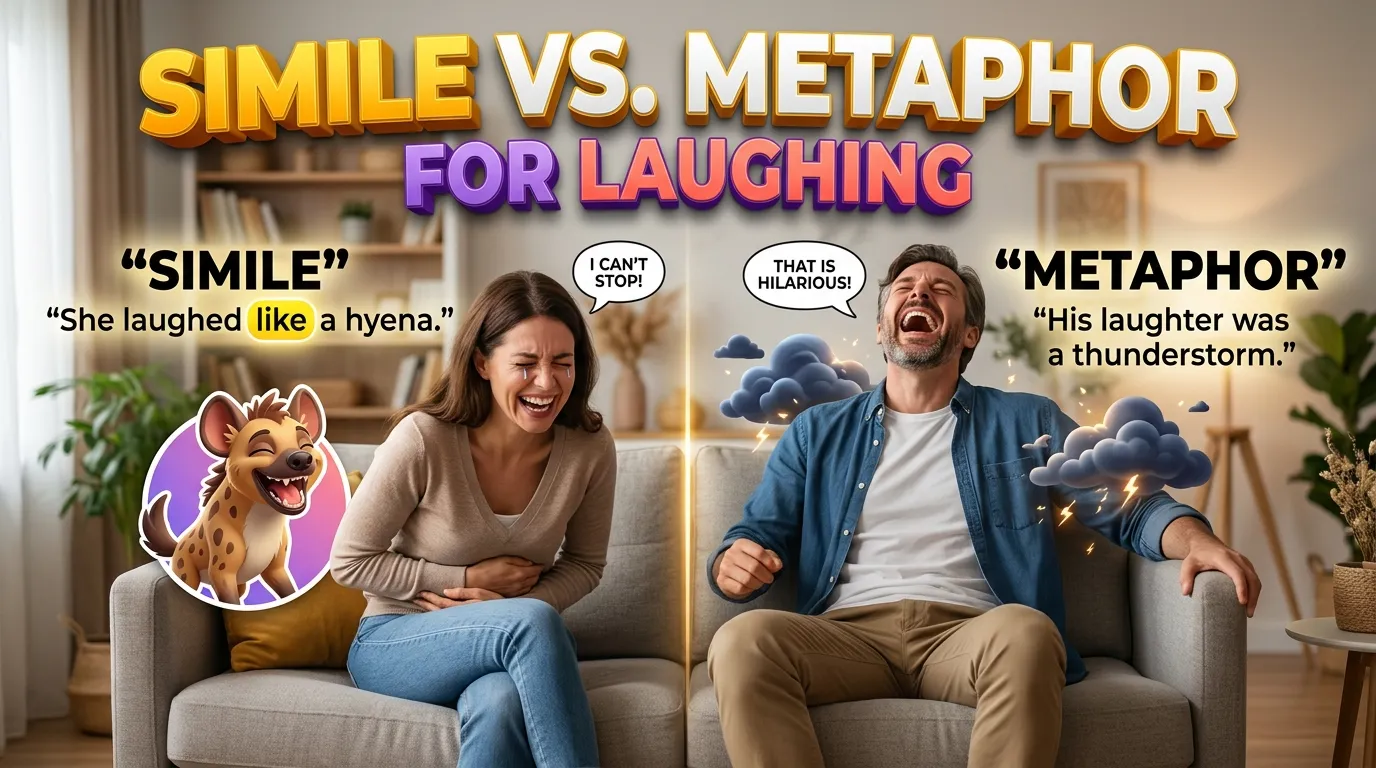
Simile vs. Metaphor for Laughing
A simile uses a comparison word:
Her laughter was like music.
A metaphor makes the comparison directly:
Her laughter was music.
Both can create strong imagery, but a simile explicitly signals the comparison.
Quick List of Similes for Laughing
- Like a bell
- Like thunder
- Like fireworks
- Like a bubbling brook
- Like a waterfall
- Like rain on a rooftop
- Like a spring breeze
- Like sunlight
- Like birds singing
- Like tiny bells
- Like popcorn popping
- Like a squeaky toy
- Like a cracked bell
- Like a drumbeat
- Like a rolling stream
- Like a wave breaking
- Like a fountain
- Like a storm
- Like a runaway train
- Like a broken dam
- Like a roaring river
- Like wind chimes
- Like sparks from a fire
- Like a trumpet
- Like a distant train