

What Is a Simile for Thrilled?
A simile for thrilled compares intense happiness or excitement to something familiar, usually using the words “like” or “as.”
For example:
Her heart fluttered like a bird discovering the open sky.
This comparison conveys excitement through movement and freedom rather than merely naming the emotion.
Thrilled can describe several related experiences:
Excitement about something wonderful
Happiness after an achievement
Anticipation before an event
Delight at an unexpected surprise
Pride in a personal accomplishment
Romantic excitement
Overwhelming joy
The most effective simile reflects the specific reason for the excitement and the way that excitement feels.

Best Similes for Thrilled
These comparisons work well in everyday descriptions, school assignments, stories, and poems.
Simile | What it expresses |
|---|---|
Like fireworks lighting up the night | Explosive excitement |
Like a child on Christmas morning | Pure, eager happiness |
Like a bird released into the sky | Freedom and exhilaration |
Like winning the lottery | Extraordinary excitement |
Like a spark becoming a flame | Growing enthusiasm |
Like a balloon floating toward the clouds | Lighthearted joy |
Like a drum beating in a celebration | Energetic anticipation |
Like sunshine breaking through clouds | Sudden happiness |
Like a puppy greeting its favorite person | Unrestrained delight |
Like a rocket launching into space | Intense excitement |
Like a wave rushing toward shore | An overwhelming rush of emotion |
Like finding buried treasure | Unexpected delight |
Like a door opening to a dream | Hopeful anticipation |
Like a song bursting into a chorus | Joy that becomes impossible to hide |
Like butterflies dancing in the stomach | Nervous excitement |
Like a racehorse waiting for the starting bell | Eagerness to begin |
Like a garden blooming after rain | Renewed happiness |
Like a bell ringing on the last day of school | Freedom and celebration |
Like a star appearing in a dark sky | Sudden wonder |
Like a parade arriving on an ordinary street | Unexpected excitement |
Similes for Extreme Excitement
Sometimes thrilled means being so excited that it becomes difficult to sit still, speak calmly, or contain a smile.
Like fireworks bursting across the sky
When she heard she had won the competition, her excitement burst like fireworks across the sky.
This comparison conveys a sudden, colorful rush of happiness.
Like a rocket ready for launch
He was like a rocket ready for launch as he waited for the concert to begin.
Use this when someone is full of energy and eager for something to happen.
Like a volcano erupting with joy
His happiness erupted like a volcano when his favorite team won the championship.
This gives excitement a dramatic, powerful quality.
Like a wave crashing onto the shore
Excitement swept over her like a wave crashing onto the shore.
The image suggests an emotion that arrives all at once.
Like a bottle of soda shaken too long
The kids were like bottles of soda shaken too long, bubbling with excitement before the field trip.
This humorous comparison works well for children’s stories and classroom writing.
Similes for Thrilled and Happy
Thrill and happiness often overlap, but some comparisons emphasize warmth, delight, and contentment rather than high energy.
Like sunshine after a week of rain
He felt like sunshine after a week of rain when his best friend finally arrived.
This expresses relief and happiness after a difficult wait.
Like a garden bursting into bloom
Her heart felt like a garden bursting into bloom when she received the good news.
This creates a gentle, hopeful image.
Like a child opening a long-awaited gift
He grinned like a child opening a long-awaited gift.
This is a familiar, accessible comparison for genuine delight.
Like a song filling an empty room
Happiness filled her like a song filling an empty room.
This works well in reflective or literary writing.
Like a warm breeze on a spring morning
She felt as light as a warm breeze on a spring morning after hearing that her family was coming to visit.
This conveys gentle happiness and anticipation.
Similes for Thrilled Anticipation
Anticipation is the excitement someone feels while waiting for something important or enjoyable to happen.
Like a racehorse waiting for the starting bell
He stood like a racehorse waiting for the starting bell before the championship game.
This suggests readiness, energy, and eagerness.
Like a child counting the days until a birthday
She was like a child counting the days until a birthday as the vacation approached.
This emphasizes the pleasure of looking forward to something.
Like a kettle beginning to whistle
Excitement rose in him like a kettle beginning to whistle as the announcement drew closer.
This comparison suggests tension that gradually builds.
Like a curtain about to rise
The classroom buzzed like a theater just before the curtain rose.
This creates anticipation shared by a group.
Like a letter waiting to be opened
She felt like a letter waiting to be opened, full of possibilities and unanswered questions.
This is a more unusual, poetic image for suspense mixed with hope.
Similes for Being Thrilled by Surprise
Unexpected good news can produce a sudden burst of delight.
Like discovering treasure in the backyard
He was thrilled like someone discovering treasure in the backyard when he found the surprise waiting for him.
Like a rainbow appearing after a storm
Her mood brightened like a rainbow appearing after a storm when she learned the good news.
Like a door opening into a dream
The unexpected invitation felt like a door opening into a dream.
Like a firework going off in a quiet garden
Her excitement was like a firework going off in a quiet garden when she saw the tickets.
This contrast makes the surprise feel especially vivid.
Like finding an extra present under the tree
The little boy was thrilled like someone finding an extra present under the tree.
This comparison is particularly suitable for holiday stories.
Similes for Thrilled Children
Children often express excitement through movement, laughter, curiosity, and energetic reactions.
Like a puppy chasing a butterfly
The little girl bounced around like a puppy chasing a butterfly when she saw the playground.
Like popcorn popping in a pan
The students were like popcorn popping in a pan when the teacher announced the class trip.
This humorous image conveys restless energy.
Like a kite caught in a strong breeze
He ran around like a kite caught in a strong breeze on his birthday morning.
Like a bell ringing at recess
The children were as eager as a bell ringing at recess when the playground gates opened.
Like a frog leaping into a pond
She jumped like a frog leaping into a pond when she heard that her cousins were visiting.
These comparisons are easy for young readers to understand and adapt.
Similes for Romantic Excitement
Romantic excitement may feel playful, nervous, joyful, or overwhelming. The best comparison depends on the relationship and the moment.
Like butterflies dancing in the stomach
She felt like butterflies were dancing in her stomach when she saw her crush.
This familiar expression captures nervous anticipation.
Like fireworks on a summer night
His heart felt like fireworks on a summer night when she smiled at him.
This communicates intense romantic excitement.
Like a favorite song coming on unexpectedly
Seeing her partner walk through the door felt like a favorite song coming on unexpectedly.
This comparison conveys immediate happiness and familiarity.
Like a letter sealed with a secret
She felt like a letter sealed with a secret as she waited for their first date.
This creates a playful, mysterious tone.
Like the first page of a love story
Their first conversation felt like the first page of a love story.
This is suitable for romantic fiction and personal writing.
Similes for Thrilled After an Achievement
Success can create a special kind of excitement mixed with relief, pride, and satisfaction.
Like reaching the summit of a mountain
She felt like a climber reaching the summit of a mountain after finishing her final exam.
This communicates accomplishment after sustained effort.
Like crossing the finish line
He was thrilled like a runner crossing the finish line after months of training.
This works well for sports, school, and personal goals.
Like a trophy shining under bright lights
Her pride shone like a trophy under bright lights when she received the award.
This emphasizes recognition and achievement.
Like a locked door finally swinging open
Passing the test felt like a locked door finally swinging open.
This conveys relief alongside excitement.
Like a seed becoming a flower
She felt like a seed becoming a flower when her hard work finally paid off.
This creates a gentler image of personal growth.
Similes for Physical Signs of Being Thrilled
Excitement often appears through a racing heart, wide eyes, restless movements, laughter, and an uncontrollable smile.
A heart beating like a drum
His heart beat like a drum when his name was announced as the winner.
Eyes shining like stars
Her eyes shone like stars when she saw the surprise party.
A smile spreading like sunlight
A smile spread across his face like sunlight across a field.
Hands trembling like leaves in the wind
Her hands trembled like leaves in the wind as she waited to open the envelope.
This can suggest nervous excitement rather than pure happiness.
Feet bouncing like springs
His feet bounced like springs while he waited for the doors to open.
This is a playful way to show that someone cannot keep still.
Similes for Thrilled in Creative Writing
A strong simile reveals something about the character, scene, or emotional intensity. Instead of inserting comparisons randomly, connect them to what is happening.
In a story
When the acceptance letter arrived, Maya felt like a bird breaking free from its cage, her excitement carrying away months of worry.
The comparison conveys happiness and a sense of release.
In dialogue
“I’m buzzing like a beehive!” Jordan shouted as the team boarded the bus.
This gives a character a lively, informal voice.
In descriptive writing
The crowd moved like a river of celebration, every face bright with anticipation.
This extends the idea of excitement from one person to an entire group.
In poetry
My heart leaped like a spark into the night, My hopes rose like balloons taking flight.
These lines use comparisons to express joyful anticipation through rhythm and imagery.
How to Choose the Right Simile for Thrilled
Not every kind of excitement feels the same. Choose a comparison that matches the emotion you want the reader to imagine.
Type of excitement | Useful imagery |
|---|---|
Explosive joy | Fireworks, volcanoes, bursting bubbles |
Nervous anticipation | Butterflies, ticking clocks, rising steam |
Childlike happiness | Birthday gifts, puppies, playgrounds |
Romantic excitement | Favorite songs, stars, first pages |
Pride in achievement | Summits, finish lines, opening doors |
Quiet delight | Sunshine, gardens, spring mornings |
Uncontainable energy | Rockets, springs, popping popcorn |
Unexpected happiness | Treasure, rainbows, surprise gifts |
The comparison should reinforce the context instead of competing with it.
How to Create Your Own Similes for Thrilled
You can create fresh comparisons by identifying what excitement feels like in a particular moment.
Identify the kind of excitement
Ask yourself whether the person feels energetic, nervous, surprised, proud, relieved, or peacefully happy.
Choose an image with a similar quality
If excitement builds slowly, consider a kettle heating up or a curtain about to rise. If it arrives suddenly, imagine fireworks or sunlight breaking through clouds.
Connect the image using “like” or “as”
For example:
The excitement rose like a kite climbing into a strong wind.
Add context
The excitement rose like a kite climbing into a strong wind as the school bus approached the amusement park.
The setting gives the comparison a clear purpose.
Read the sentence aloud
A good simile should sound natural. If the comparison feels exaggerated or confusing, simplify it or choose a more suitable image.
Common Mistakes When Using Similes for Thrilled
Using the same image repeatedly
Fireworks, butterflies, and sunshine are familiar comparisons. They can work well, but using them in every paragraph makes writing predictable.
Confusing excitement with fear
A racing heart or trembling hands can indicate excitement, anxiety, fear, or a combination of emotions. Use the surrounding context to make the intended feeling clear.
Overloading the sentence
Too many comparisons can weaken the main image.
Instead of describing fireworks, butterflies, rockets, sunshine, and storms in one sentence, choose the image that best captures the moment.
Choosing an image that does not fit the character
A young child might compare excitement to a birthday party. A scientist might describe it as a discovery opening an entirely new field of possibility. Both can be effective when they fit the speaker.
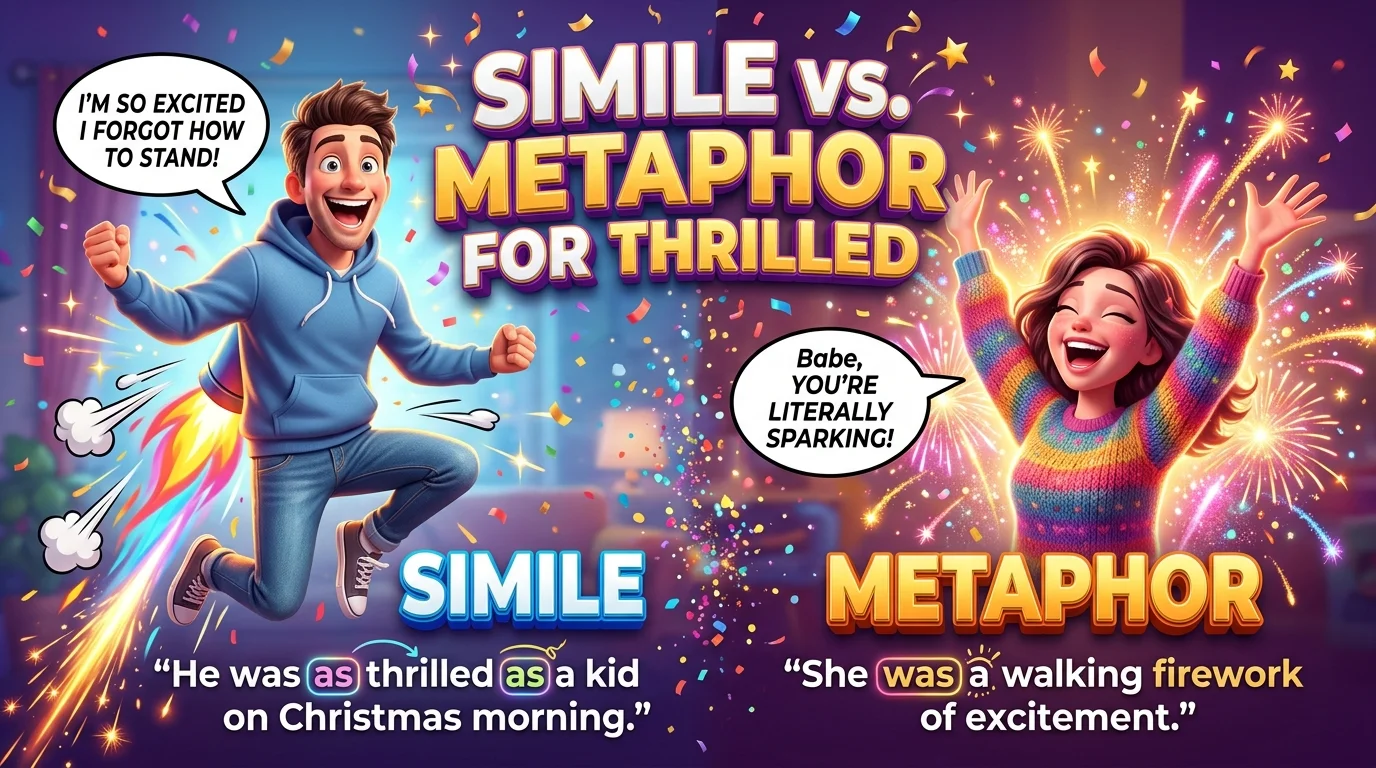
Simile vs. Metaphor for Thrilled
A simile compares two things using “like” or “as.”
Her excitement was like fireworks lighting up the sky.
A metaphor describes one thing as another.
Her excitement was a sky full of fireworks.
Both forms create vivid imagery, but a simile makes the comparison explicit. A metaphor can make the image feel more direct.