
What Does Being Unprepared Mean?
Being unprepared means not having the knowledge, equipment, practice, resources, or plans needed for a particular situation. It can happen because of poor planning, limited time, unexpected changes, or simply not knowing what to expect.
For example, a student who hasn’t studied for a test may feel unprepared academically. Someone asked to speak in front of a crowd without warning may feel unprepared emotionally and mentally.
A simile makes these experiences more vivid by comparing them to familiar situations or objects.
Best Similes for Unprepared
Here are some effective similes for describing someone who isn’t ready.
Simile | Meaning |
|---|---|
Like a student taking a test without studying | Lacking the necessary knowledge |
Like an actor forgetting their lines | Unready to perform when expected |
Like a sailor without a compass | Lacking direction or guidance |
Like a runner at the starting line without shoes | Missing essential preparation |
Like a chef without a recipe | Unsure how to proceed |
Like a traveler without a map | Uncertain about the next steps |
Like a goalie without gloves | Not properly equipped |
Like a speaker handed a microphone without warning | Caught off guard in public |
Like a builder without blueprints | Lacking a clear plan |
Like a firefighter arriving without equipment | Unable to respond effectively |
Like a musician facing an unfamiliar song | Lacking practice or familiarity |
Like a camper in a storm without a tent | Unprepared for difficult conditions |
Similes for Unprepared with Meanings and Examples
1. Like a Student Taking a Test Without Studying
This simile describes someone who lacks the knowledge needed to handle a task successfully. It works especially well in school-related writing.
Example: When the teacher announced a surprise quiz, Marcus felt like a student taking a test without studying.
2. Like an Actor Forgetting Their Lines
This comparison suggests someone who is expected to perform but has not practiced enough or cannot remember what to do.
Example: Standing before the audience without rehearsing, Lena felt like an actor forgetting their lines.
3. Like a Sailor Without a Compass
A sailor without a compass has no reliable way to find direction. This simile describes someone who lacks a plan or guidance.
Example: Without instructions for the new project, I felt like a sailor without a compass.
4. Like a Runner at the Starting Line Without Shoes
This image emphasizes missing something essential before a challenge begins.
Example: He arrived at the competition without practicing and felt like a runner at the starting line without shoes.
5. Like a Chef Without a Recipe
This simile describes someone who must complete a task but doesn’t know the steps to follow.
Example: Asked to organize the entire event without any guidance, Priya felt like a chef without a recipe.
6. Like a Traveler Without a Map
A traveler without a map may struggle to choose the right direction. The comparison suits situations involving uncertainty and poor planning.
Example: On her first day managing the team, she felt like a traveler without a map.
7. Like a Speaker Handed a Microphone Without Warning
This simile captures the nervousness of being unexpectedly placed in the spotlight.
Example: When the host called his name, Daniel felt like a speaker handed a microphone without warning.
8. Like a Builder Without Blueprints
Blueprints provide a plan for construction. Without them, a builder may not know where to begin or how the pieces fit together.
Example: We started the assignment without discussing our ideas, like builders without blueprints.
9. Like a Musician Facing an Unfamiliar Song
This comparison emphasizes the difficulty of performing without practice or knowledge of what’s coming next.
Example: When the band changed the song unexpectedly, I felt like a musician facing an unfamiliar song.
10. Like a Camper in a Storm Without a Tent
This simile conveys vulnerability when difficult conditions arrive before someone has prepared.
Example: The sudden downpour left us feeling like campers in a storm without a tent.
Similes for Being Unprepared at School
School is a familiar setting for situations involving missed preparation, surprise tests, presentations, and unfinished assignments. These similes can make school-related writing more descriptive.
Like a student with an empty notebook before an exam: Lacking notes or useful preparation.
Like a pitcher entering a game without warming up: Starting a demanding activity without getting ready.
Like a presenter with blank slides: Having nothing prepared to support a presentation.
Like a reader opening a book to a language they don’t understand: Facing material without the necessary knowledge.
Like a backpack without a pencil on test day: Missing a basic but important tool.
Like a chess player who hasn’t studied the board: Entering a challenge without considering the situation.
Example: When the teacher asked her to explain the chapter, Maya felt like a presenter with blank slides, searching for an idea she hadn’t prepared.
Similes for Unprepared at Work
Workplace situations often require planning, organization, and the ability to respond to unexpected demands. These comparisons are useful for professional stories, essays, and realistic dialogue.
Like a pilot facing turbulence without a checklist: Unready to manage a difficult situation.
Like a manager walking into a meeting without an agenda: Lacking a plan for the discussion.
Like a mechanic arriving without tools: Unable to complete the job properly.
Like a receptionist answering a question without the information: Caught off guard by a request.
Like a chef opening a restaurant with an empty pantry: Missing necessary resources.
Like a project manager standing before a deadline with no schedule: Unprepared to organize the work.
Example: When the client asked for the figures, he felt like a mechanic arriving without tools because he hadn’t reviewed the report.
Similes for Feeling Unprepared and Nervous
Sometimes being unprepared is less about missing equipment and more about the emotions that come with uncertainty. These similes emphasize anxiety, embarrassment, and self-doubt.
Similes That Express Nervousness
Like a leaf caught in an unexpected wind: Feeling unsettled by sudden changes.
Like a tightrope walker who hasn’t practiced: Afraid of making a mistake during a difficult task.
Like a deer hearing a sudden noise: Startled and unsure how to react.
Like a candle flickering in a strong breeze: Struggling to remain confident under pressure.
Like a first-time actor facing a packed theater: Feeling exposed and anxious.
Like a boat pushed into unfamiliar waters: Feeling uncertain in a new situation.
Example: As the interviewer handed her a difficult question, she felt like a tightrope walker who hadn’t practiced.
Funny Similes for Unprepared
Humorous similes can make a story or conversation more entertaining without making the situation sound too serious.
Like a penguin invited to a desert race: Completely mismatched to the challenge.
Like a phone at one percent battery on a long trip: Likely to run out of resources at the worst time.
Like a chef trying to bake a cake with a shoe instead of a spoon: Missing the right tools and approach.
Like a cat entering a room full of rocking chairs: Unsure how to handle the situation.
Like a magician who forgot the trick: Expected to deliver something impressive but lacking a plan.
Like a squirrel who buried the instructions instead of the nuts: Confused about what preparation was actually needed.
Like a comedian who forgot the punchline: Unready when everyone expects a performance.
Like a snowman arriving at a summer picnic: Poorly suited to the circumstances.
Example: When I opened the spreadsheet and realized I’d never prepared the presentation, I felt like a magician who had forgotten the trick.
Similes for Suddenly Being Caught Unprepared
These similes focus on surprise: the moment when something unexpected happens and a person has to react immediately.
Like a goalkeeper facing a penalty without warning: Forced to react instantly.
Like a door swinging open in a strong wind: Suddenly thrown into an unexpected situation.
Like a passenger stepping onto a moving walkway for the first time: Struggling to adjust quickly.
Like a person handed a puzzle with missing pieces: Unable to see the full picture.
Like a boat caught in a sudden storm: Confronted by unexpected trouble.
Like a photographer whose camera has no battery: Unable to respond when the moment arrives.
Example: When the principal asked him to address the entire assembly, he felt like a goalkeeper facing a penalty without warning.
Short Similes for Unprepared
If you need a concise comparison for a sentence, caption, poem, or school assignment, these shorter options may fit naturally.
Like a ship without a sail.
Like a scout without a plan.
Like a cook without ingredients.
Like a player without practice.
Like a traveler without directions.
Like a singer without lyrics.
Like a painter without a brush.
Like a student without notes.
Like a gardener without seeds.
Like a climber without a rope.
Like a clock without hands.
Like a key without a lock.
Like a kite without a string.
Like a pilot without a flight plan.
Like a performer without a script.
Some of these comparisons are deliberately imaginative rather than literal. Choose one that matches the exact situation you want to describe.
Similes for Unprepared in Sentences
Seeing similes in context can make it easier to understand how to use them naturally.
Before the exam: I felt like a student taking a test without studying when I saw the first question.
During a presentation: He stood before the audience like an actor who had forgotten his lines.
At a new job: On my first morning, I felt like a traveler without a map.
During a surprise meeting: She entered the room like a manager without an agenda.
Before a competition: The team looked like runners at the starting line without shoes.
During an emergency: They were like campers in a storm without a tent.
In a funny story: I approached the kitchen like a chef without a recipe and somehow made dinner worse.
In a poem: My thoughts scattered like leaves caught in an unexpected wind.
During an interview: He felt like a musician facing an unfamiliar song when the interviewer changed the subject.
While starting a project: We began like builders without blueprints, hoping the pieces would somehow fit together.
How to Choose the Right Simile for Unprepared
The strongest simile doesn’t simply say someone wasn’t ready. It helps readers understand why they weren’t ready and how the situation felt.
Choose a Simile Based on the Situation
Lack of knowledge: Use a student taking a test without studying.
Lack of planning: Use a builder without blueprints.
Lack of direction: Use a sailor without a compass.
Lack of equipment: Use a mechanic arriving without tools.
Sudden surprise: Use a speaker handed a microphone without warning.
Fear or anxiety: Use a tightrope walker who hasn’t practiced.
Humor: Use a magician who forgot the trick.
Match the Tone of Your Writing
A serious essay may benefit from a comparison involving a pilot, sailor, or builder. A funny story can use a penguin in a desert race or a magician who forgot the trick. A poem may benefit from a more emotional image, such as a leaf caught in an unexpected wind.
The comparison should support the mood rather than distract from it.
Make Familiar Similes More Original
Comparisons involving students, maps, and forgotten lines are easy to understand, but they can feel familiar. To make your writing more distinctive, add a specific detail.
Instead of writing:
He was like a traveler without a map.
Try:
He was like a traveler unfolding a blank map at a crossroads.
The added image makes the uncertainty more concrete and gives readers a clearer picture of the character’s predicament.
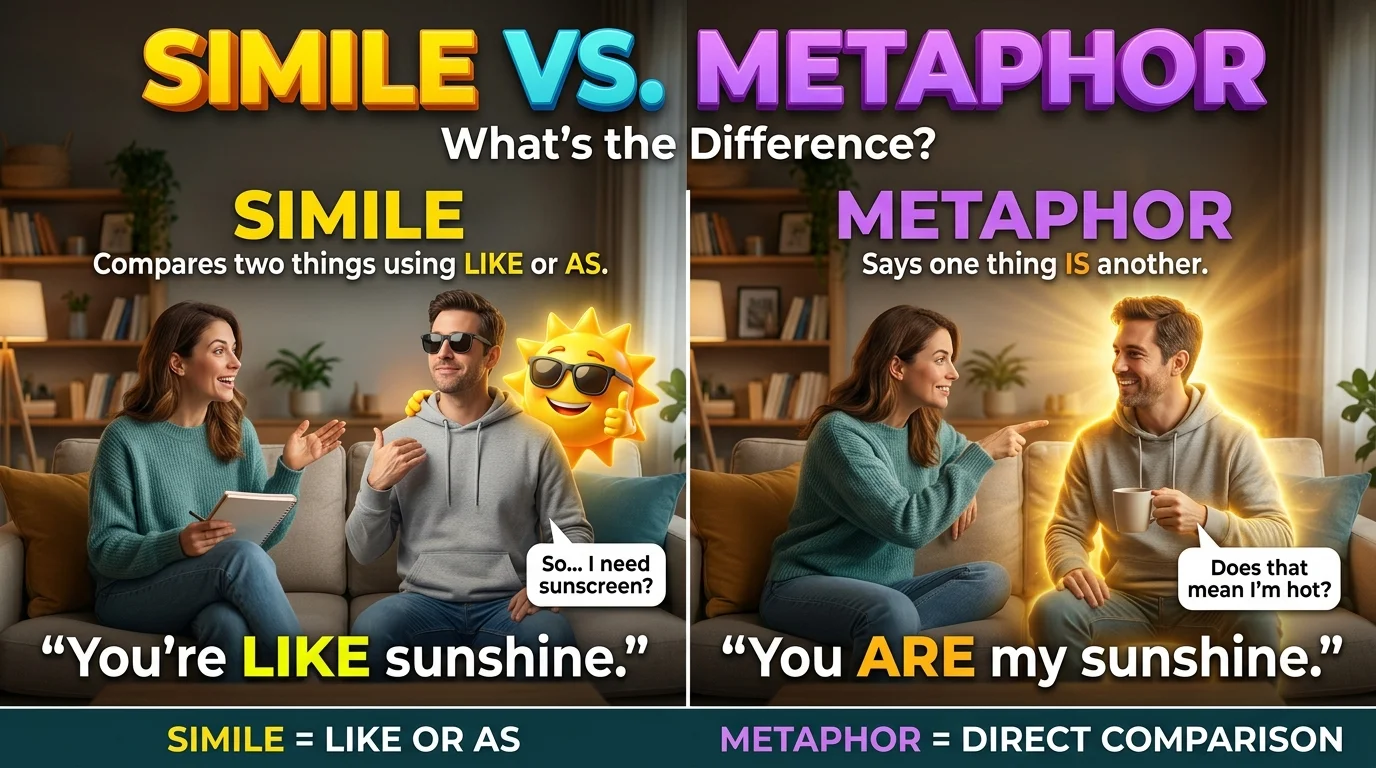
What Is the Difference Between a Simile and a Metaphor?
A simile compares two different things using words such as like or as. A metaphor describes one thing as another without using an explicit comparison.
Type | Example |
|---|---|
Simile | She was like a sailor without a compass. |
Metaphor | She was a sailor without a compass. |
Both can communicate a lack of direction or preparation. The simile makes the comparison explicit, while the metaphor presents the image more directly.